
What Causes Bad Breath? And How Your Dentist Can Help
February 10, 2026
What to Bring to Your First New Patient Appointment
March 18, 2026If you are a parent, you already know how hard it can be to keep your child’s teeth clean. You can remind them to brush. You can help them floss. And somehow, food still finds a way to hide in places a toothbrush never seems to reach.
That is where dental sealants come in.
Dental sealants are one of those things parents often hear about but are not always sure they fully understand. Are they necessary? Are they safe? And does every child actually need one?
Let’s break it down so you feel comfortable with your child receiving the oral care they need.
What Is a Dental Sealant?
A dental sealant is a thin, protective coating that is applied to the chewing surfaces of certain teeth, usually the back molars. These teeth have deep grooves and pits that can trap food and bacteria, even when your child is brushing regularly.
The sealant acts like a barrier. It seals off those grooves so food particles and cavity causing bacteria cannot settle in as easily. Think of it as adding a raincoat to the tooth surface most likely to get cavities.
Dental sealants are most commonly recommended for children, but they can also be used for teens and even adults in some cases.
Why Are Back Teeth More at Risk?
Molars do most of the chewing, which means they are exposed to more food and more pressure. Their uneven surfaces make them harder to clean, especially for kids who are still learning proper brushing techniques.
Even children who brush their teeth well can miss these deep grooves. Over time, trapped food particles allow bacteria to grow, which increases the risk of tooth decay.
Dental sealants help protect vulnerable areas before cavities have a chance to form.
How Dental Sealants Help Prevent Cavities
Dental sealants do not replace brushing your teeth or flossing. They just add an extra layer of protection to your childs teeth.
Once applied, the sealant smooths out the surface of the tooth. This makes it harder for bacteria to stick and easier for brushing to be effective. Studies consistently show that sealants can significantly reduce the risk of cavities in children’s molars.
For many kids, sealants help prevent cavities during the years when they are most likely to develop them.
When Should a Child Get Dental Sealants?
Dental sealants are usually recommended once permanent molars come in. This often happens between the ages of six and fourteen.
That said, timing can vary from child to child. Your dentist will look at your child’s teeth, their oral health habits, and their cavity risk before making a recommendation.
Sealants work best when they are placed early, before decay has started.
What Is the Dental Sealant Procedure Like?
One of the best advantages of dental sealants is how simple the process is.
There is no drilling. No needles. And no pain.
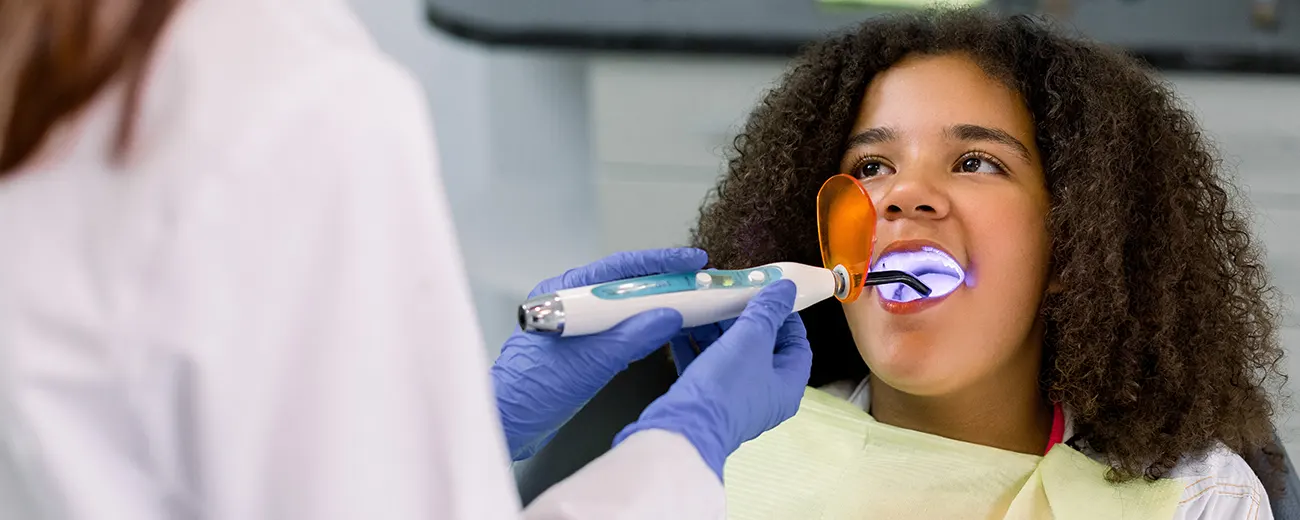
The tooth is first cleaned and dried. A special solution is applied to help the sealant bond properly. Then the sealant is brushed onto the tooth and hardened using a curing light.
The entire process usually takes just a few minutes per tooth. Most children do not feel anything at all.
Are Dental Sealants Safe?
Yes. Dental sealants have been used for decades and are considered safe and effective.
They are made from dental grade materials designed specifically for use in the mouth. Once hardened, the sealant stays in place and does its job quietly in the background.
If a sealant ever wears down or chips, it can be repaired or replaced easily during a routine dental visit.
Do All Children Need Dental Sealants?
Not every child needs dental sealants, but many benefit from them.
Sealants are often recommended for children who:
- Have deep grooves in their molars
- Have had cavities in the past
- Are still developing strong brushing and flossing habits
- Are at higher risk for tooth decay
Your dentist will assess whether sealants make sense for your child based on their individual oral health and risk factors.
How Long Do Dental Sealants Last?
Dental sealants are durable, but they are not permanent.
They can last several years with proper care. During regular dental checkups, your dentist will monitor the sealants to make sure they are still intact and working properly.
If a sealant shows indications of wear, it can usually be repaired quickly without removing the entire coating.
Can Dental Sealants Replace Good Oral Hygiene?
No. Dental sealants are a supplement, not a replacement.
Your child still needs to brush their teeth twice a day, floss regularly, and maintain healthy eating habits. Sealants simply help protect the areas that are hardest to keep clean.
Combined with good oral hygiene and routine dental visits, sealants can play a big role in supporting long term oral health.
How a Dentist Can Help You Decide
Deciding whether your child needs a dental sealant should not feel stressful or confusing.
During your child’s dental exam, the dentist will assess the shape of their teeth, their cavity risk, and their overall oral health.
From there, they can recommend whether dental sealants would be beneficial and explain the reasoning behind that recommendation.
Final Thoughts
Dental sealants are an effective way to help protect your child’s teeth during the years when cavities are most likely to develop. They are quick to apply, painless, and designed to support healthy teeth as children grow.
While not every child needs a dental sealant, many benefit from the extra protection, especially on hard to clean back teeth.
If you are unsure whether dental sealants are right for your child, a conversation with a dental professional can help you make an educated decision that supports your child’s long term oral health.
At Knox Mountain Dentistry, the focus is on prevention and education. Book an appointment today!